
In the Alpine region, the signs of climate change are no longer distant warnings, they are already reshaping mountain life: warmer temperatures, less reliable snowfall, retreating glaciers, and increasingly frequent extreme weather events are putting the winter tourism model under growing pressure. At the same time, current maladaptation measures (such as an overdependence on artificial snowmaking or expanding infrastructure into ecologically sensitive areas) can cause further environmental harm without ensuring the long-term resilience that is needed.
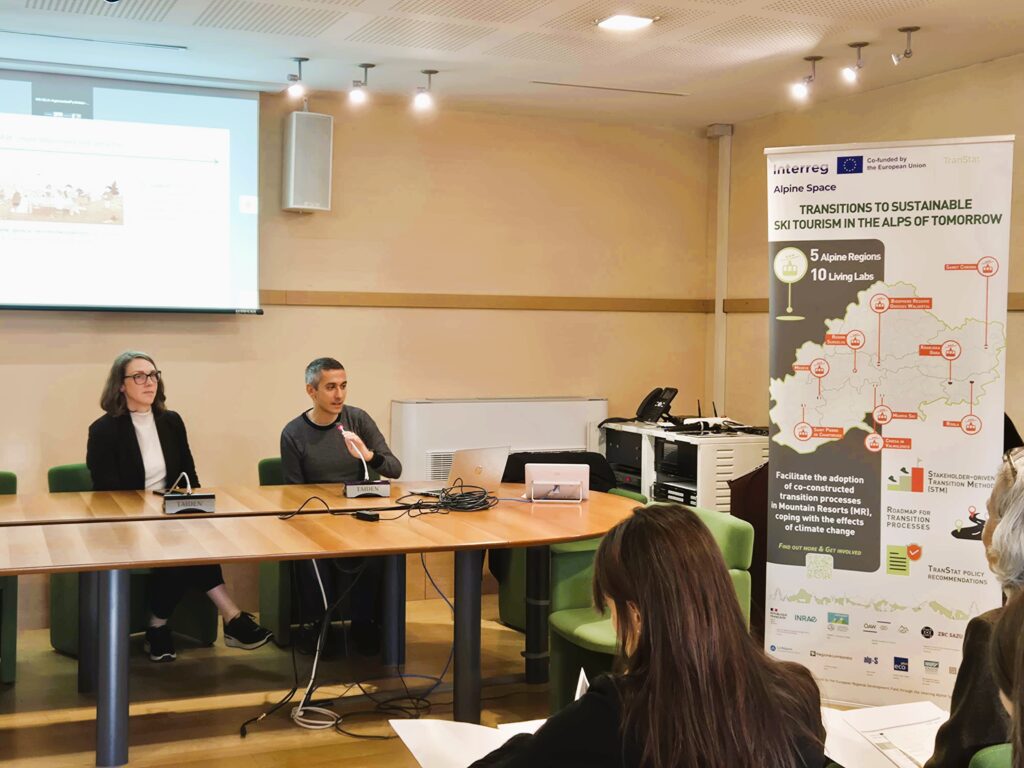
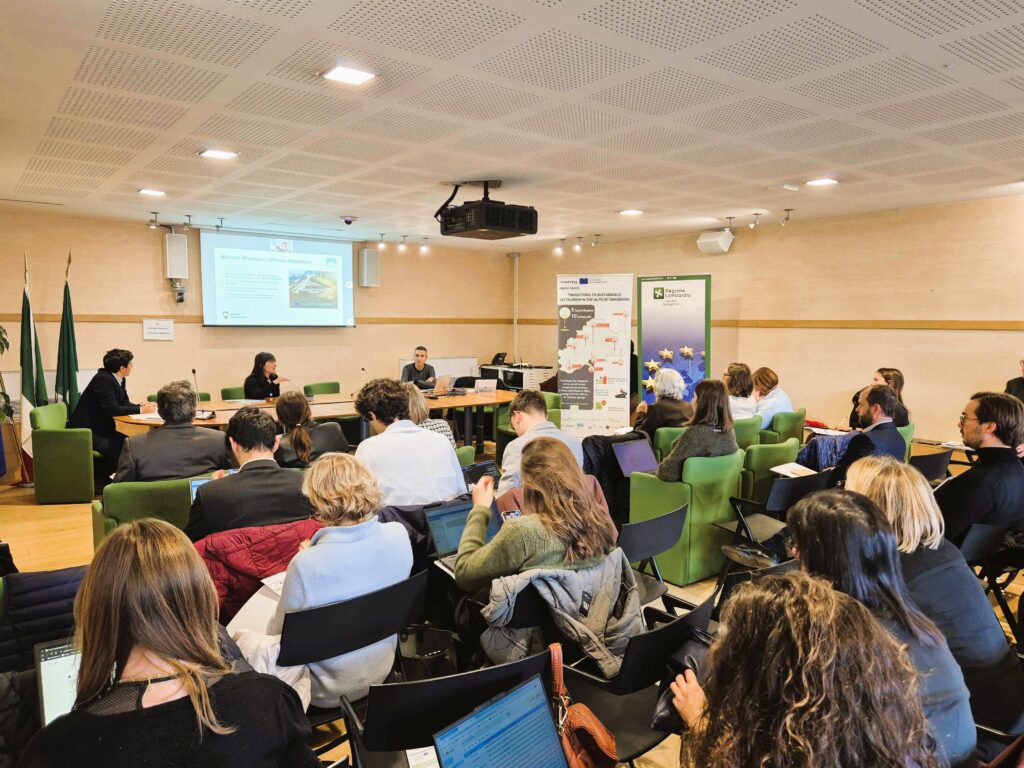
With this in mind, the TranStat project (Transitions to Sustainable Ski Tourism in the Alps of Tomorrow, Interreg Alpine Space) has released an inspiring Position Paper, including policy recommendations, designed to guide the sustainable transformation of Alpine winter tourism. The document was officially presented on 28 October during an event in Brussels, hosted by Regione Lombardia, where experts, policymakers, and mountain stakeholders came together to explore the future of winter tourism in the Alps.
The paper, endorsed by MountResilience, draws attention to the growing vulnerability of Alpine resorts, whose strong dependence on winter tourism makes them especially susceptible to climate impacts. It emphasises that meaningful, long-lasting resilience can only be achieved through locally driven transition processes supported by coordinated action at European, Alpine, and national levels.
Among its recommendations, the document calls for stronger EU recognition of mountain regions, the creation of a European Mountain Pact, formalised participatory planning for sustainable transitions, and highlights the importance of diversifying mountain economies by supporting entrepreneurship and promoting education and training for emerging green professions
The full position paper can be found here.