- Risnjak National Park, 28th of November 2025
The first stakeholder workshop of the MountResilience project, implemented under the HORIZON Clima programme and focused on fostering transformative climate-change adaptation in Europe’s mountain regions, was held on 28th of November 2025 in Risnjak National Park.
The workshop was jointly organised by the Public Institution Spatial Planning Institute of the Primorje-Gorski Kotar County and Urbanex Ltd., both MountResilience project partners, with the participation of representatives of relevant local and regional institutions, as well as various stakeholders from the Gorski Kotar civil sector. The workshop is the first in a series of four events aimed at bringing together key stakeholders who will contribute with their suggestions and experiences to the development of a replication plan for the Gorski Kotar region.
In the first part of the workshop, alongside a presentation of the MountResilience goals, partners and expected as well as current project results, an overview was provided of the current scope of climate-change impacts in the fields of forestry, climatology, biodiversity, and health protection. As an introduction to the practical part of the workshop, the following topics were presented: Challenges and potentials of the forests of Gorski Kotar and the impacts of climate change on forest ecosystems; Climate change in mountain areas – monitoring, interpretation and management in national parks and nature parks; Climate-change impacts in Risnjak National Park; Health–environment literacy and climate-related health effects in Gorski Kotar; and the potentials of Gorski Kotar as a possible UNESCO Global Geopark. The presentations provided insights and concrete data for further reflection on adaptation possibilities across key thematic areas.
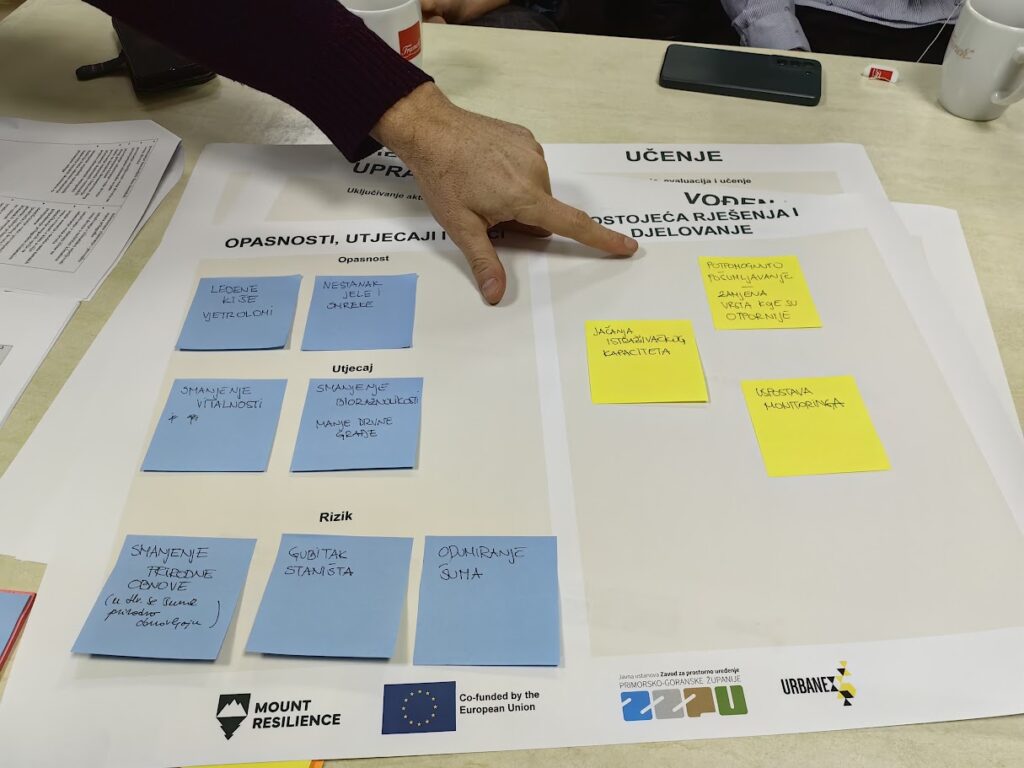
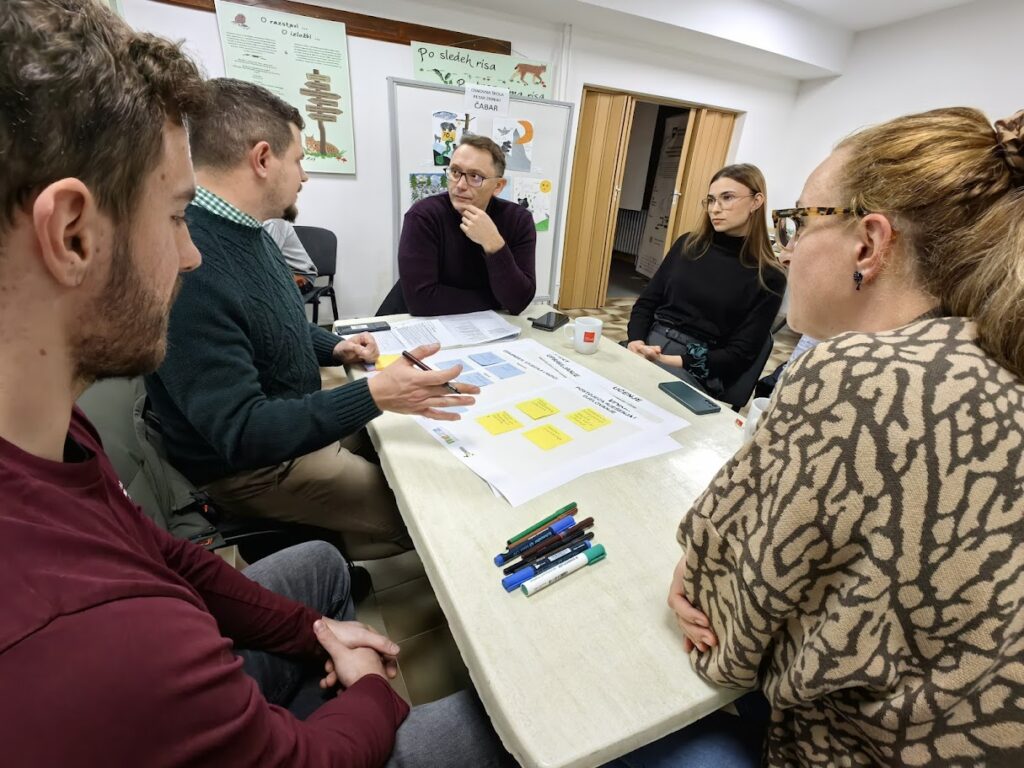
The second, interactive part of the workshop consisted of stakeholder work in three thematic groups (forestry, biodiversity and tourism). Each group worked through three blocks focusing on: identifying climate risks and existing solutions and actions, including examples of good practices already implemented in the Gorski Kotar area; questions related to transformative capacities, including inclusive and multi-level governance, polycentric leadership, community empowerment, reflexivity and learning; and, in the third block, questions concerning priority measures as well as the partners and funding sources required for their implementation.
The exchange of professional experiences and perspectives within the three themes contributed to building a shared understanding of the challenges facing mountain regions and opened opportunities to strengthen cooperation and implement further activities aimed at enhancing resilience and promoting the sustainable development of Gorski Kotar.
At the end of the group discussions, one representative from each group briefly summarised the key findings of the interactive work and presented them to all stakeholders. The proposals and conclusions generated during the workshop will provide valuable input for the development of the replication plan for the Gorski Kotar area. In addition to concrete comments and suggestions, the workshop successfully achieved its goal of connecting and networking relevant stakeholders, thereby contributing to raising awareness of the importance of climate-change adaptation and the need for cross-sectoral cooperation in order to achieve significant and lasting results, not only within the MountResilience project but also in the long term.